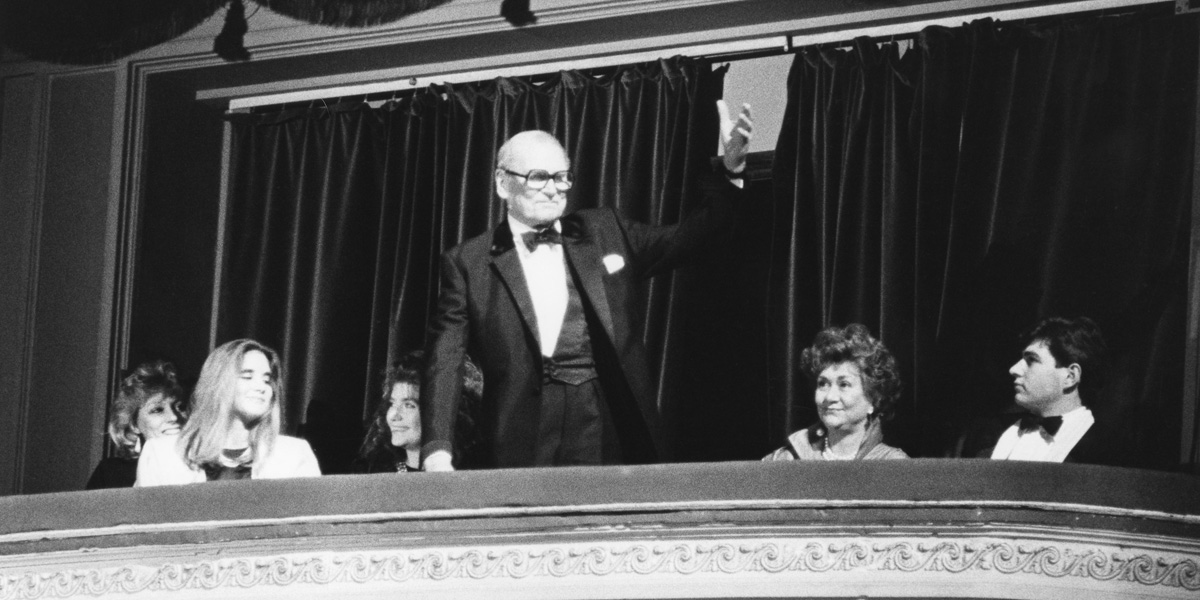
The Origins of the Olivier Awards
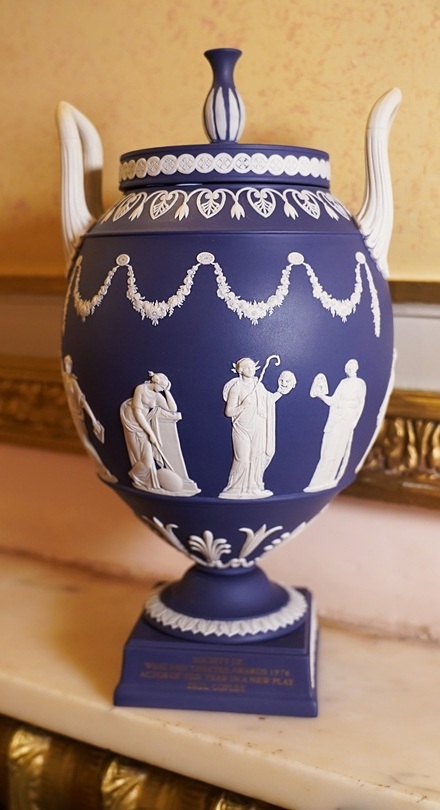
No one knew it at the time, but December 1976 changed British theatre forever. One fateful night at the Café Royal, a group of young, enthusiastic – and probably nervous – industry peers got together to produce the first incarnation of what we now know as the Olivier Awards.
On that historic evening, the then-named Society of West End Theatre Awards took place – a ceremony created to honour and celebrate excellence in London theatre. And who produced said industry-changing proceedings? Well, it was none other than the world-renowned Cameron Mackintosh whose own production of Side By Side By Sondheim was nominated for the Musical of the Year award. Attracting attention immediately, the awards hit the TV screens as a short highlights reel at the end of the BBC’s daily early evening magazine programme, Nationwide, and a long-running relationship with the BBC was born.
At the time, no one could have predicted that this modest yet ambitious event would create such a splash and evolve into what we now know as the Olivier Awards – the most prestigious honours in London theatre.
But let’s rewind, just a little bit further, and look at how the first show came together. Leading theatre producers wanted to manifest their shared belief that extraordinary achievements on the London stage deserved to be noted and recognised. The idea of a formal awards ceremony seemed like the most obvious choice, particularly as Broadway’s Tony Awards were such a big hit. But who were the driving forces?
The awards’ biggest cheerleader and one of its spearheads was director, playwright and producer Ray Cooney OBE. His enthusiasm helped cement the team’s dedication and belief in the project which is now a worldwide authority on theatre. In 1996, Cooney truly earned the fruits of his labour when he was given the notoriety he helped create, winning the Olivier Award for Best Comedy for his play Out Of Order.
Unsurprisingly, John Gale OBE was a key figure in its formation. Gale was the president of the Society of West End Theatre (now known as Society of London Theatre or SOLT) in the years leading up to the awards. During that time, he played a pivotal role in establishing some of London theatre’s most innovative and long-lasting ventures, including the half-price ticket booth, now known as the Official London Theatre Ticket Booth in Leicester Square. Through his contribution, the West End became more accessible to theatregoers.
Another crucial player was Sir Peter Saunders, who also served as SOLT’s president in the ‘60s. He’s most well-known for producing the original stage adaptation of The Mousetrap, which currently (and continues to) hold the record of the world’s longest-running play. Just like Gale, Sir Peter and his wife, Lady Saunders, made theatre accessible in meaningful ways. Their legacy continues through their estate, which generously supports the Laurence Olivier Bursary, assisting drama school students facing financial hardship.
Also celebrated by the awards he helped create was Sir Michael Codron CBE. The producer was a towering figure in post-war British theatre. Through his career, he helped some of the most important playwrights of the 20th century bring their creations to life. We’re talking Tom Stoppard, Harold Pinter, David Hare – some of the true greats in theatre history. He himself has been a recipient of the Outstanding Achievement award, for being “one of the West End’s most influential producers” at the 2010 Olivier Awards ceremony.And who could forget Rupert Rhymes OBE, who took the reins as President of the Society of West End Theatre in 1979 and later became the Chief Executive of the Society of London Theatre and Theatrical Management Association (now UK Theatre).
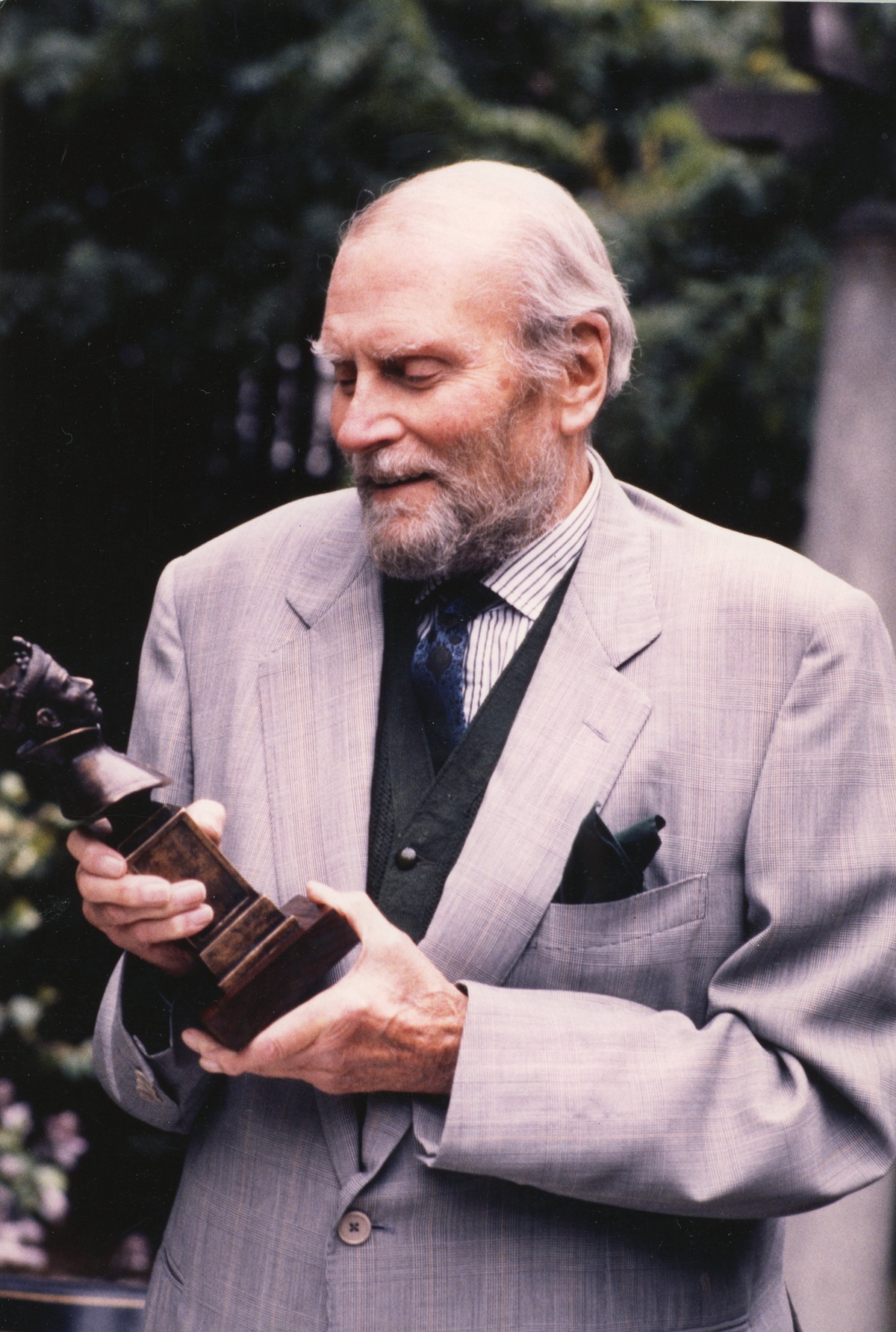
When the idea of renaming the awards to something snappier and more appealing than the acronyms SWET or SOLT Awards was raised, Rhymes championed the moniker Olivier Awards, in honour of his previous employer, Sir Laurence Olivier. Before his death, Lord Olivier attended the show as often as he could, depending on his health.
But it’s not just the people who have made the Olivier Awards so compelling over the years. We’d be lying if we said the venues are anything but main characters in the Olivier Awards story. The Royal Albert Hall has become synonymous with the grand affair. But before it found its home, the Oliviers had graced the stages and halls of Grosvenor House, The London Palladium, His Majesty’s Theatre and more.
Though the venues may have the biggest role, the winners are the stars of the show. Over the last five decades, some of the biggest names in theatre have proudly accepted Olivier Awards and earned a place in history. The list of past recipients reads like a who’s who of the West End, particularly the Special Award winners. From John Gielgud to Athene Seyler, anyone who has left a lasting mark on theatre have been recognised by the awards.While the core team were instrumental in establishing the awards, their success has been a collective endeavour. The dedication of SOLT’s members and staff have continually ensured the vision, message and esteem of the awards reflect the intentions of the founding creators. And it’s thanks to the innovation and commitment of all those involved over the past 50 years that have made the Olivier Awards the gold standard in artistic excellence.
If nothing else, take away the knowledge that the Olivier Awards are inseparable from the story of modern theatre, which continues to be ambitious, collaborative and ever-evolving.